Some forty-plus years ago, while completing my associate degree in horticulture, I applied and was accepted to the University of Georgia. I wanted to pursue a degree in ethnobotany. With a lifelong love of history, folklore and plants, this was hardly a surprising choice. Then suddenly everything changed. I said yes to the man who would become husband and best friend. Forty-plus years later, I have no regrets.
Yet I never stopped studying the useful plants. There is something almost reverential about touching the leaves and inhaling the fragrance of something that has helped to enrich the lives of countless generations. I am always excited to become acquainted with plants well-established in their usefulness.
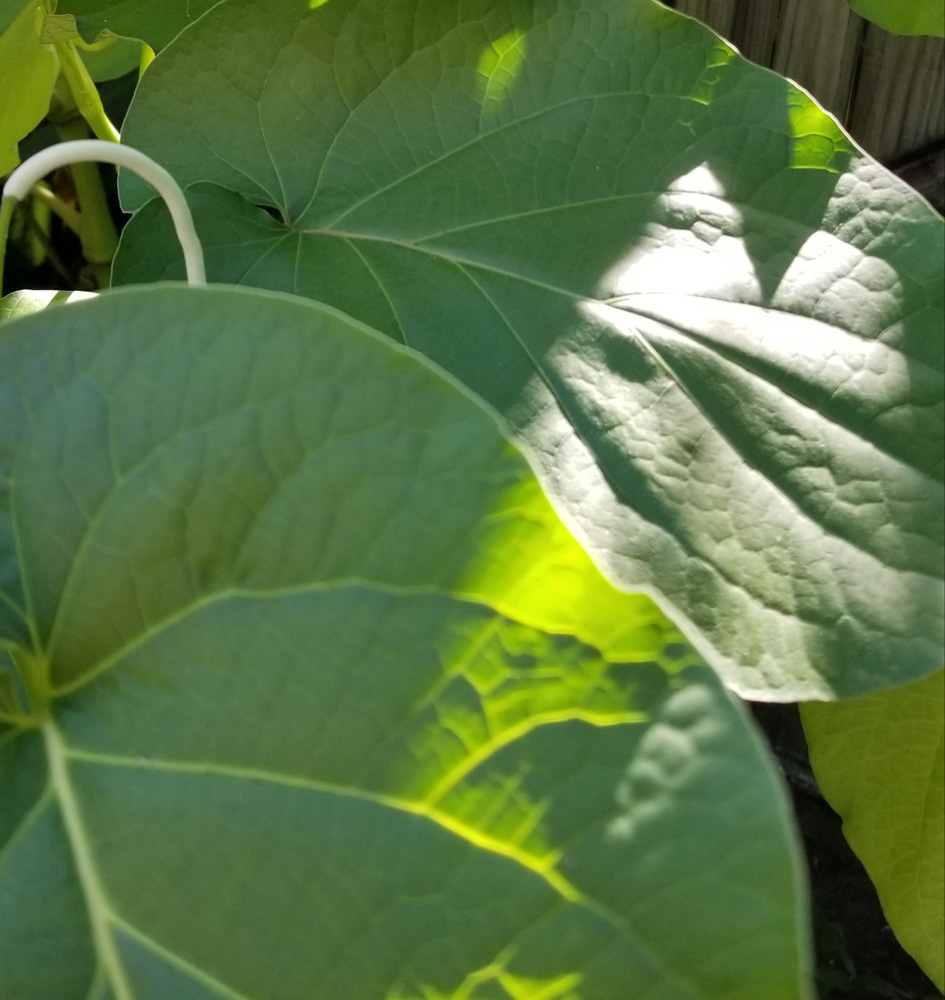
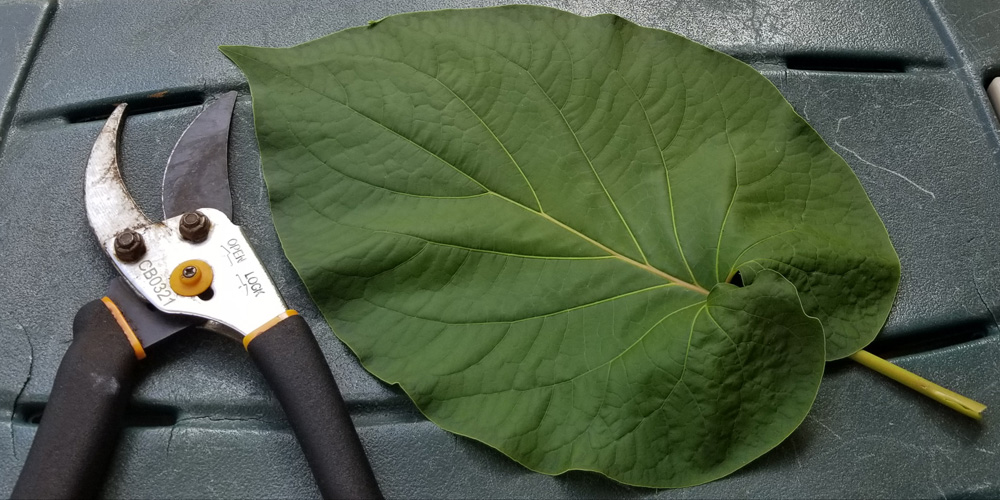
This is how I felt when I received the tiny starter plant for Mexican Pepperleaf (Piper auritum), a plant closely related to black pepper (Piper nigrum). Pepperleaf or Root Beer Plant is also known as Hoja Santa in Central America, where the large heart-shaped leaves are used to wrap fish and tamales.
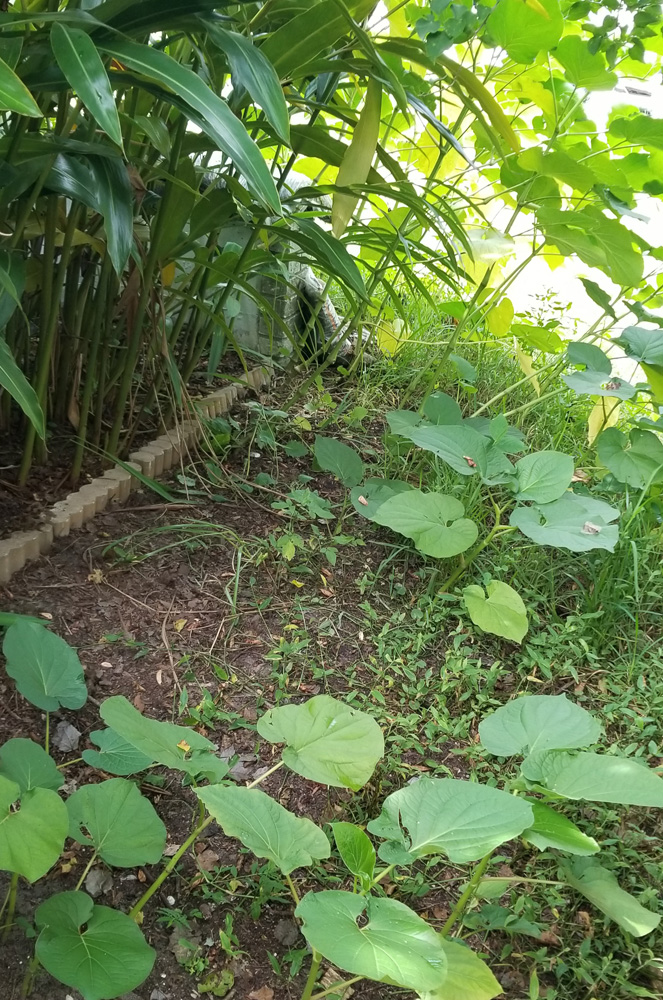
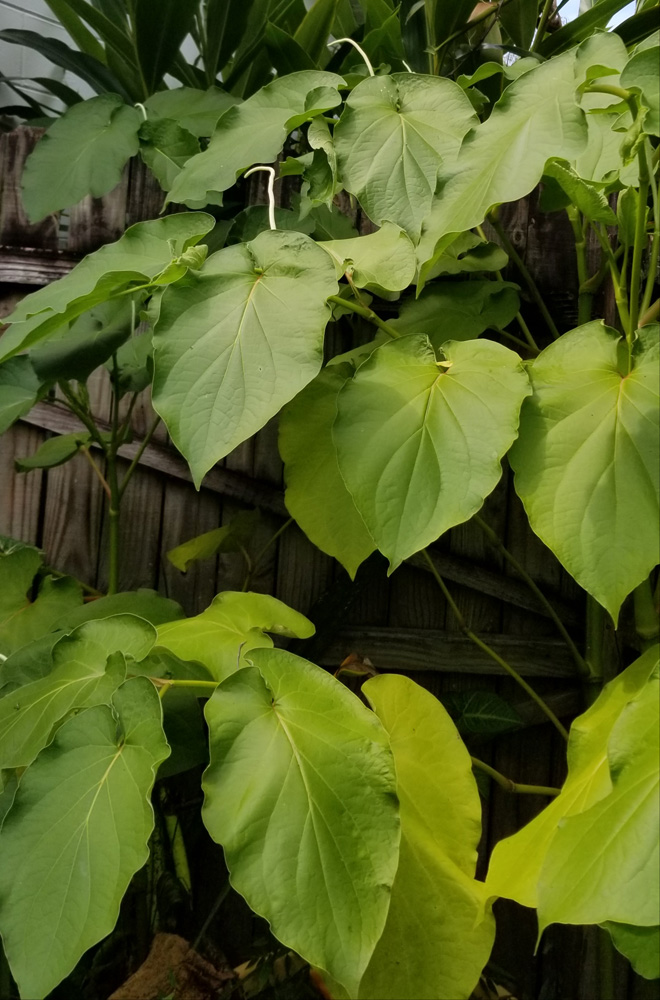
I find the sassafras-like aroma and the soft leaves delightful. I was excited to grow this plant. …Just one problem. Turns out P auritum has an extremely aggressive growth habit that can quickly get out of control. From what I have observed this past summer, there are excellent reasons for concern about growing this plant in Florida. I will attempt to demonstrate what I’m talking about with the photos below.
In the first photo you can actually tell the path the aggressive underground runners are following. If left unchecked, the runners would soon invade my neighbor’s yard.
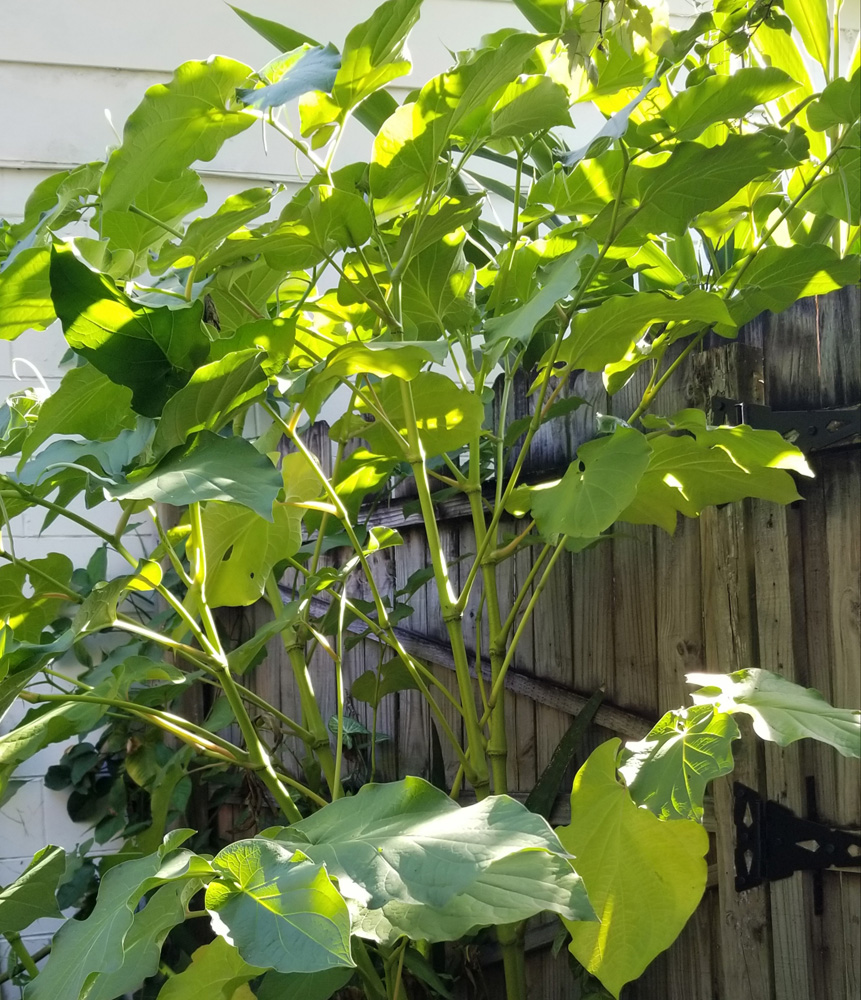
The runners went under the fence, and by September the new plants they sprouted were taller than the fence. More plants were spreading from the runners. This past summer was fairly dry for Central Florida. If the rains had come as usual, the situation could have become much worse. I left all of this alone, deliberately, until mid September. I wanted to understand the growth habit before deciding what to do.
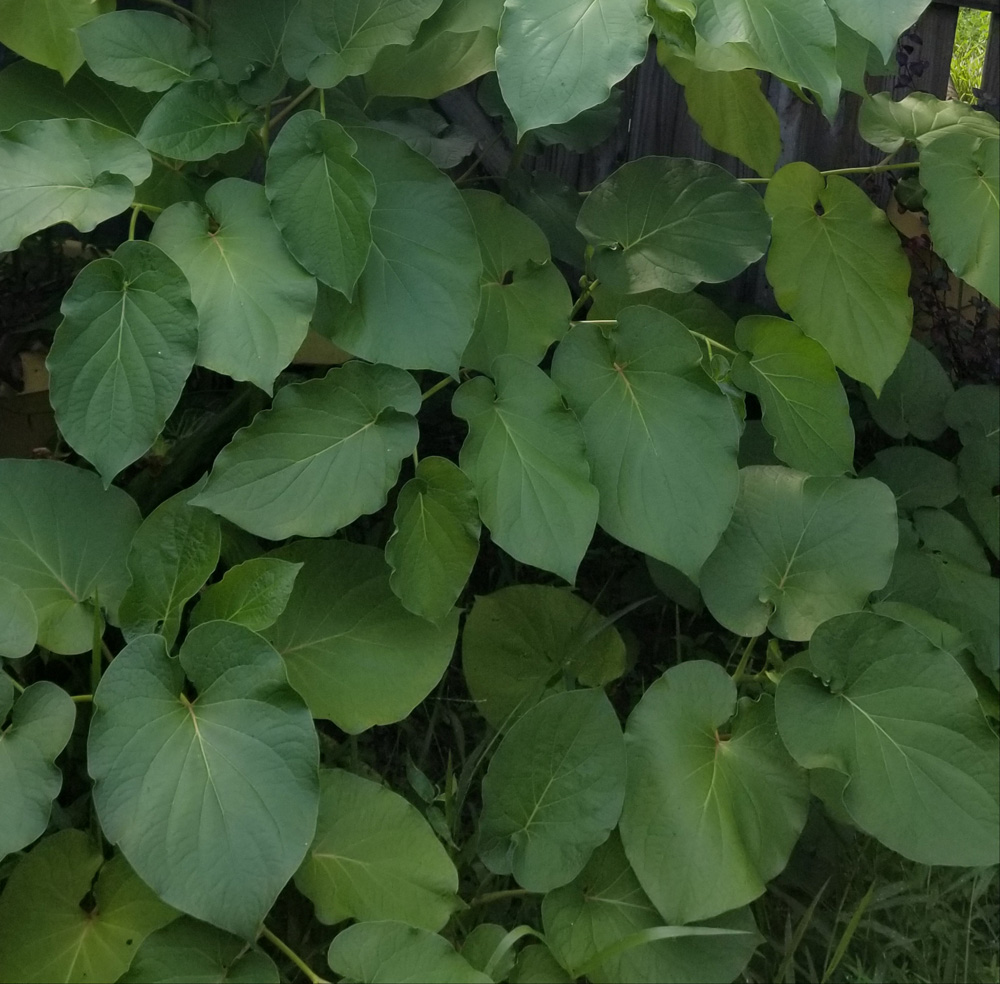
Sadly, P auritum has the potential to become a real menace in Florida. If permitted to spread into what little remains of our natural habitats, the canopy of large leaves could shade out native plants.
Look at the lush green leaves. I haven’t seen much evidence that insects make use of them. In other words, P auritum would have the ability to create stands of growth of no practical value to our native species.
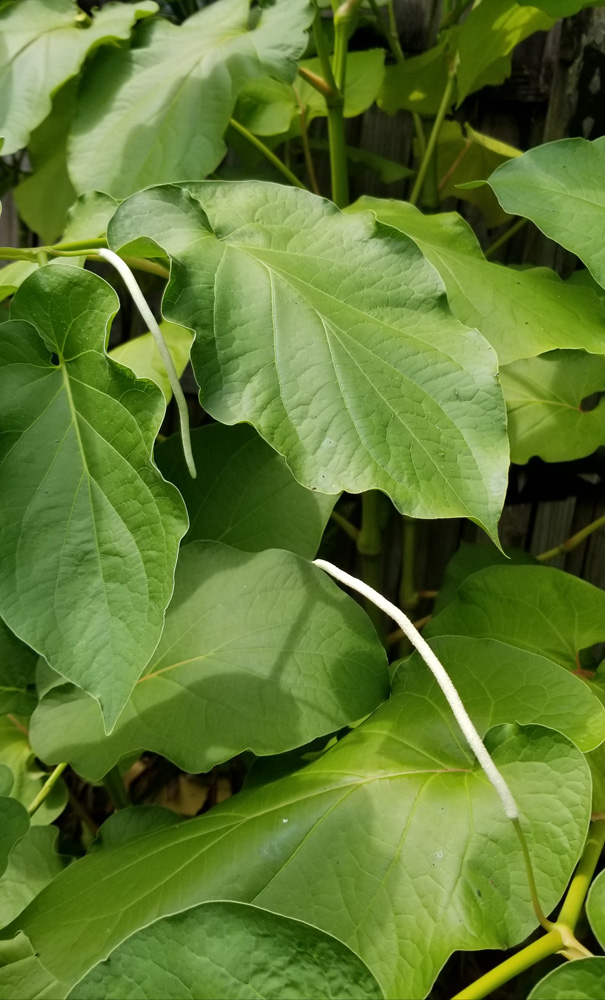
When I began to consider these things, my mind immediately suggested strategies for growing the plant “safely”. I could keep one in a large planter, although there’s no doubt in my mind that those aggressive runners would find ways out of any drainage hole. So, I could keep one inside my screened pool enclosure, in a planter, with a saucer. I could cut off the seed spikes before they matured. This could be done.
But should it be done?
The only place I have an actual say about what happens to Florida land is in my own little yard. I try not to cause too much harm. Certainly, I grow plenty of non-natives, but few things that could be called aggressive.
So while my passion for studying useful plants has never waned, and while I would love to find out how to use P auritum in the kitchen, I choose not to do it. After a little rain this past week, more plants are emerging from the underground runners. Eradicating P auritum from my property will take some time, but it will happen.
The only actions I control are those that I make about my own choices.
Piper auritum is a beautiful, fragrant and useful plant that could become an invasive menace if permitted to grow out of control.